



Dr T Selva
The home we live in has always been regarded as more than a physical shelter.
It is a living space of energy, subtle, dynamic, and deeply responsive to the people and
elements within it.
In Vasthu Sastra, every object, direction, and presence within a home is believed to influence
this energy field, shaping the well-being of its occupants.
One question that often arises in modern households is this: What does Vasthu say about
keeping pets, particularly dogs and cats?
More specifically, there is a long-standing belief that while dogs are considered auspicious,
cats are not. But how should we understand this in today’s context?
Traditionally, dogs have been associated with protection, loyalty, and vigilance.
In Hindu spiritual symbolism, the dog is linked to Bhairava, a fierce manifestation of Lord
Shiva.
The dog is seen as the deity’s companion and guardian, symbolising watchfulness and the
ability to ward off negative influences.
This association has naturally led to the belief that keeping a dog in the home invites
protective and positive energy.
Cats, on the other hand, have been viewed differently in certain traditional circles.
Their quiet, independent, and nocturnal nature has sometimes been misunderstood, leading to
perceptions that they are associated with secrecy or subtle, unseen forces.
In some folklore, cats have even been associated with mystery, unpredictability and
negativity, which over time translated into the idea that they may not be energetically
favourable within a home.
However, it is important to pause here and reflect: are these interpretations absolute truths, or
are they cultural perceptions shaped by time, context, and human understanding?
Vasthu Sastra, at its core, is not about rigid rules but about harmony.
It teaches us to observe how energy flows within a space and how that energy interacts with
those who live in it.
From this perspective, it becomes clear that the presence of any living being, whether human
or animal, cannot be judged solely by traditional labels.
A dog, though symbolically protective, can create disturbance if it is aggressive, neglected, or
kept in unsuitable conditions.
Excessive barking, restlessness, or poor hygiene can disrupt the calm energy of a home.
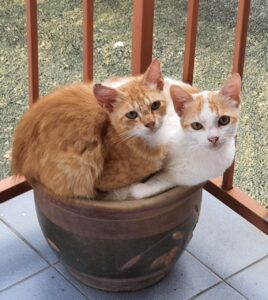
Similarly, a cat, often perceived as aloof, can, in fact, bring quiet companionship, calm, and
emotional comfort when well cared for and integrated into the household.
What truly matters is not the species, but the state of being.
A pet that is loved, nurtured, and cared for radiates a gentle and positive vibration.
Animals are highly sensitive to human emotions and environments.
They respond to affection, stability, and routine. In return, they often become sources of joy,
emotional healing, and even stress relief for their owners.
In such a setting, the energy they contribute is undoubtedly uplifting.
On the other hand, any pet, whether a dog, cat, or otherwise, that is neglected, confined
improperly, or left in unclean conditions can contribute to stagnation and discomfort.
Odour, clutter, and poor hygiene are all factors that Vasthu clearly identifies as disruptors of
positive energy flow.
This brings us to a more practical and relevant understanding of Vasthu in modern living.
If one chooses to keep pets at home, attention must be given to cleanliness, placement, and
care.
Feeding areas should be kept neat and ideally placed in appropriate zones, such as northwest
and southeast of the house.
Sleeping areas for pets should not obstruct pathways or create cluttered corners.
Most importantly, the overall environment must remain fresh, well-ventilated, and
harmonious.
Equally significant is the emotional energy of the occupants. A home filled with compassion,
responsibility, and love naturally creates a high vibrational field.
Pets, in such an environment, become part of that positive ecosystem rather than a source of
imbalance.
It is also worth acknowledging that many traditional guidelines were framed in a different
era, when lifestyles, living conditions, and human-animal relationships were very different
from what they are today.
In earlier times, animals were often kept outdoors, and concerns about hygiene and safety
were more pronounced.
These factors may have influenced certain interpretations that are now carried forward
without context.
In today’s environment, pets arenot merely animals; they are companions, often considered
part of the family.
They share our living spaces, our routines, and even our emotional journeys.
To label one as inherently auspicious and another as inauspicious without considering the
broader picture may oversimplify a much deeper science.
Vasthu, when understood in its true spirit, encourages awareness rather than fear.
It invites us to observe, to feel, and to create balance in our surroundings.
It reminds us that energy is not dictated by superstition but by alignment between space,
intention, and living presence.
Therefore, whether one chooses to keep a dog, a cat, or any other pet, the guiding principle
should always be harmony.
Ancient traditions also teach that caring for stray animals generates positive Karma, uplifting
both the home and the heart.
Feeding dogs is believed to invite protection, while kindness to cats fosters calm and
compassion.
When done mindfully and responsibly, such acts expand the home’s energy, returning not as
superstition, but as grace.
In conclusion, while tradition may offer symbolic interpretations, modern understanding calls
for mindful application.
Every image, object, and living being within a home carries an energy that subtly influences
our thoughts, emotions, and behaviour. Pets are no exception.
It is not the animal itself, but the energy we create around it, that shapes the atmosphere of
our home.
Award-winning writer Dr. T. Selva is the author of the bestsellers Vasthu Sastra Guide
and Secrets of Happy Living. To get a copy, WhatsApp 019-2728464. He can be reached
at drtselvas@gmail.com. Website: www.vasthuguide.com