


By Dr. T. Selva
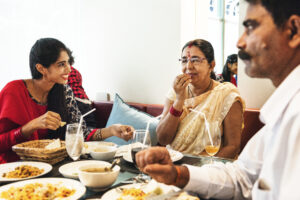
There was a time when the dining table was one of the most important places in a family
home.
It was where parents and children gathered, exchanged stories, shared their worries and
celebrated little achievements over a simple meal.
The food may not have been elaborate, but the conversations, laughter and warmth made
every meal special.
Today, however, the family dining table appears to be gradually losing its significance.
In many modern homes, family members eat at different times, often in front of the
television, in their bedrooms or while scrolling through their mobile phones.
Some even prefer to eat alone, despite living under the same roof.
This changing lifestyle raises an important question: Are we losing something precious by
abandoning the tradition of eating together?
In Vasthu Sastra, the ancient Indian science of architecture and harmonious living, the dining
area is more than a place to eat.
It represents nourishment, togetherness, gratitude and the sharing of positive energy among
family members.
According to Vasthu system, the atmosphere in which food is prepared and consumed can
influence the emotional well-being and relationships of the occupants.
A peaceful dining environment is believed to encourage harmony, understanding and stronger
family bonds.
Conversely, a dining space filled with arguments, distractions and tension is considered
unfavourable.
Although these beliefs are rooted in ancient wisdom, they also offer a practical lesson for
modern families.
When people gather around a table, they have an opportunity to communicate, listen and
reconnect without the distractions of daily life.
Unfortunately, such moments are becoming increasingly rare.
Many parents are occupied with their careers, while children are absorbed in their studies,
social media and electronic gadgets.
Even when everyone is seated together, it is not unusual to see each person staring at a
mobile phone rather than speaking to one another.
We may be connected to hundreds of people through technology, yet becoming increasingly
disconnected from those living in our own homes.
Eating together has long been associated with respect, affection and family unity.
Food is considered sacred because it sustains life and represents Mother Nature’s generosity.
In many families, people offer prayers before meals to express gratitude for the nourishment
they receive.
Similar values are found in other cultures.
Whether it is a Chinese family gathering for a reunion dinner, a Malay family sharing a meal
during Hari Raya or an Indian family enjoying a festive feast, food has always brought people
together.
These occasions remind us that the true value of a meal lies not merely in what is served, but
in the people with whom it is shared.
Unfortunately, many families now reserve such gatherings for festivals, birthdays and special
occasions.
Why should eating together become an occasional celebration when it can be a simple daily
expression of love?
Vasthu places importance on the location, arrangement, and atmosphere of the dining space.
Ideally, the dining area should be conveniently located near the kitchen so food can be served
comfortably without unnecessary movement throughout the house.
The western or northwestern section of a home is traditionally considered suitable for dining,
although the final location should be assessed based on the property’s overall layout and
orientation.
The dining space should be clean, well-ventilated and adequately illuminated.
Natural daylight is particularly desirable because it creates a cheerful and welcoming
atmosphere.
A rectangular or square dining table is generally preferred in Vasthu, as these balanced shapes
symbolise stability and unity.
Avoid a dining table with sharp, protruding corners where possible, particularly in restricted
spaces where occupants may frequently knock against them.
Oval and round tables are not recommended, as the energy flow on such shapes does not
promote togetherness.
The head of the family should face south when consuming meals.
However, the most important practical consideration is that every family member should feel
comfortable, respected and included.
Avoid positioning the dining table directly beneath a staircase, under beams or in a cramped,
dark corner.
Such arrangements are regarded as unfavourable because they create a sense of heaviness and
restriction.
The dining table should also not become a dumping ground for newspapers, unpaid bills,
handbags, schoolbooks and other unwanted possessions.
In Vasthu, clutter is associated with stagnation and disorder.
A clean and inviting table, perhaps decorated with a small bowl of fresh fruits or flowers, can
create a pleasant atmosphere.
Another interesting aspect of traditional Indian wisdom concerns the state of mind of the
person preparing and serving food.
It is believed that food prepared with affection, gratitude and peaceful thoughts carries
positive vibrations.
Similarly, eating while angry, anxious or engaged in heated arguments is discouraged.
Although such spiritual interpretations cannot be scientifically measured, maintaining a calm
atmosphere during meals offers considerable practical wisdom.
A pleasant conversation, a kind word or even a simple smile can make the dining experience
more enjoyable.
The dining table should never become a place where children are constantly criticised, family
disputes are settled or unpleasant subjects dominate every conversation.
Instead, it should be a place where everyone feels safe to speak and, more importantly, to be
heard.
Parents can encourage this by putting away their phones and giving their children undivided
attention.
Children, in turn, can learn the values of patience, gratitude, respect and sharing.
Even a short family meal can become a meaningful daily ritual.
I understand that modern lifestyles make it difficult for every family member to eat together
three times a day.
Different working hours, school commitments and personal responsibilities often prevent
this.
However, families can begin with something simple.
Choose at least one meal each day, or several meals during the week, when everyone makes
an effort to gather around the table.
Switch off the television, put away the mobile phones and allow conversations to flow
naturally.
It doesn’t matter whether the meal is an elaborate feast or a humble plate of rice and
vegetables.
What matters is being with those we love.
A beautiful house with expensive furniture and luxurious interiors does not automatically
become a happy home.
Its true beauty comes from the relationships, kindness and understanding shared by the
people living within it.
Vasthu Sastra reminds us that harmony is not achieved through the placement of doors,
furniture and rooms alone.
It must also be nurtured through our thoughts, words and actions.
Perhaps it is time to rediscover the dining table, not merely as a piece of furniture, but as the
heart of family life.
After all, a family that makes time to eat together also makes time to care for one another.
Award-winning writer Dr. T. Selva is the author of the bestsellers Vasthu Sastra Guide
and Secrets of Happy Living. To obtain a copy, WhatsApp 019-2728464. He can be
reached at drtselvas@gmail.com. Website: www.vasthuguide.com