


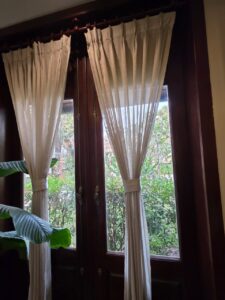
 In Vasthu Sastra, a house is not regarded as an inert structure of bricks and cement, but as a living organism, one that breathes, sees, responds, and evolves along with its occupants.
If the main door is the mouth through which energy enters, then windows are unquestionably the eyes and lungs of the house.
Through them, the home observes the world and inhales the subtle life force that sustains harmony, health, and clarity.
Modern homes, especially in urban settings, often compromise on window design in the name of privacy, energy efficiency, or aesthetics.
Tall glass façades sealed shut, dark interiors dependent on artificial lighting, and apartments with barely any cross-ventilation have become commonplace.
Yet, Vasthu reminds us that a house deprived of natural light and fresh air slowly loses its vitality, much like a human being who forgets to breathe deeply.
The placement and number of windows are of great significance. Vasthu recommends that windows be more prominent in the East and North directions, as these directions are associated with Surya (the Sun) and Kubera (the lord of wealth), respectively.
Morning sunlight from the East is gentle and life-giving. It awakens not just the house, but the consciousness of those who dwell within.
North-facing windows invite steady, balanced light throughout the day and are believed to support prosperity, clarity of thought, and emotional stability.
Windows in the South and West, while not forbidden, should be comparatively smaller.
The harsh afternoon sun from these directions can increase heat and agitation if not moderated.
In traditional homes, this wisdom was intuitively applied through courtyards and shaded verandahs, elements that allowed light and air to enter without overwhelming the interior.
A house with too few windows tends to feel heavy and oppressive.
Over time, such spaces may contribute to lethargy, irritability, or even unexplained sadness among occupants.
On the other hand, a home with well-distributed windows feels alive.
Air circulates freely, stagnant energies are flushed out, and the mind remains alert yet calm. Cross-ventilation, in which windows are placed opposite or diagonally across from each other, is particularly beneficial.
It creates a natural flow that refreshes both space and spirit.
One of the most common Vasthu violations today is the blocking or sealing of windows. Heavy curtains kept permanently drawn, windows obstructed by furniture, grills layered with plastic sheets, or windows that no longer open “because there is air-conditioning”, all these symbolically and energetically suffocate a home.
When air cannot move, thoughts too become stagnant. Decisions feel clouded. Conversations grow tense. Sleep becomes restless.
Vasthu views this not as a coincidence, but as cause and effect.
Natural light plays a role far beyond visibility. Sunlight is a powerful purifier.
It neutralises negativity, uplifts mood, and regulates the body’s internal rhythms.
A house bathed in daylight rarely feels oppressive. Artificial lighting, though convenient, lacks the subtle intelligence of the sun.
Excessive dependence on white LED lights, especially in living spaces, can create a cold and restless atmosphere.
Warm lighting, used mindfully and in moderation, is more aligned with human comfort, but it can never replace the healing touch of the sun.
In homes where windows are poorly positioned or absent, common in high-rise apartments, simple remedies can help.
Keeping windows open for at least a short period each morning to allow fresh air to circulate is a powerful practice.
Mirrors can be used carefully to reflect natural light into darker corners.
Indoor plants placed near windows help revitalise energy and reconnect the home with nature.
Even the conscious act of opening the curtains at sunrise can shift the vibrational tone of a space.
Symbolically, windows represent awareness and perspective.
A house with clear, open windows reflects an openness to life, learning, and growth. Conversely, a house that shuts itself off from light and air often mirrors an inner withdrawal, sometimes unconscious, of its occupants.
Vasthu does not judge; it simply reflects.
A recent case study shared by a reader reported frequent misunderstandings and a pervasive sense of heaviness.
In recent study of a layout shared by a reader, a well-designed structure was identified, yet all windows had been sealed off concerns about dust and noise.
When the family was gently encouraged to open the windows daily, allow sunlight in, and introduce greenery, the shift was subtle but reflective.
Within weeks, they reported better sleep, calmer conversations, and a renewed sense of ease. No ritual was performed. The house simply began to breathe again.
Ultimately, Vasthu Sastra teaches that harmony is not achieved through rigid rules but through alignment with natural laws.
Windows remind us of our relationship with the outside world.
They teach us that protection should not come at the cost of isolation, and comfort should not suffocate vitality.
As we design, renovate, or even rearrange our homes, it is worth asking: Does my house see the sun? Does it breathe freely?
For when air and light flow unhindered, destiny too finds room to unfold.
Award-winning writer Dr T. Selva is the author of the bestsellers Vasthu Sastra Guide and Secrets of Happy Living. To get a copy, WhatsApp 019-2728464. He can be reached at drtselvas@gmail.com. Facebook: Vasthu Sastra