


By Dr. T. Selva
As Hindus across Malaysia celebrate Deepavali today (Nov 8), homes are filled with the
glow of oil lamps, colourful decorations, traditional delicacies and the joyful gathering of
family members and friends.
Amid the celebrations, another familiar tradition brings happiness, especially to children and
unmarried family members.
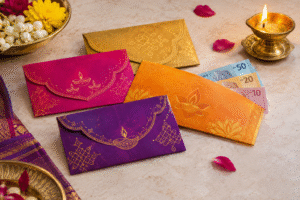
It is the practice of giving money, tucked inside colourful envelopes, as a token of goodwill
and blessings.
Visitors, especially younger ones, often look forward to receiving these little packets when
they visit relatives and friends during the Festival of Lights.
But have we ever stopped to ask why we give money during Deepavali?
Is it simply a gesture of generosity, a way of sharing our wealth, or is there a deeper spiritual
significance behind this custom?
Interestingly, similar traditions are observed during Chinese New Year, when ang pow is
distributed, and Hari Raya Aidilfitri, when children and younger relatives receive duit raya.
Although these celebrations have different religious and cultural backgrounds, they share a
beautiful message about generosity, blessings and human relationships.
In Hindu philosophy, wealth is not regarded merely as money accumulated for personal
comfort or material possessions.
It is also a resource that should be used responsibly to support others, express gratitude and
contribute towards the well-being of society.
Goddess Lakshmi, associated with wealth, prosperity, and abundance, is particularly revered
during Deepavali.
However, the blessings of Lakshmi are traditionally understood to extend beyond financial
riches to include happiness, harmony, generosity and spiritual well-being.
From this perspective, giving money during Deepavali may be viewed as a symbolic act of
sharing one’s prosperity and extending good wishes to others.
The amount given is not important. What matters is the sincerity and goodwill behind the
gesture.
A small packet containing RM5 or RM10, offered with genuine affection, can carry greater
emotional significance than a large sum given merely to impress others.
In Hindu tradition, the concept of dana, or charitable giving, is regarded as an important
virtue.
It encourages individuals to share what they possess with those who may benefit from their
generosity.
Giving without expecting anything in return is considered especially meritorious.
Although the modern custom of distributing Deepavali money packets is not a compulsory
Hindu religious practice, it can reflect this broader spiritual principle.
In Malaysia, the practice has become a cherished part of Deepavali celebrations in many
Indian households, influenced partly by our multicultural environment.
Parents, grandparents and other elders distribute money to children and younger relatives as
an expression of love and blessings for their future.
For unmarried family members, receiving a festive packet is generally a gesture of affection
and goodwill rather than a religious requirement.
The tradition varies between families, and it should never become an obligation or a measure
of someone’s marital status.
The tradition also carries a spiritual lesson for those receiving these gifts.
Children should be taught that the packet’s value lies not in the amount of money it contains
but in the blessings and affection of the person giving it.
They should receive it with gratitude and respect.
Unfortunately, in today's increasingly materialistic society, some children compare the
amounts they receive, while adults may feel pressured to give more than they can
comfortably afford.
When this happens, expectations risk overshadowing the original spirit of generosity.
From a Vasthu Sastra perspective, this idea also carries symbolic significance.
Vasthu teaches that a harmonious home should encourage the healthy circulation of the five
elements and maintain a welcoming environment for its occupants and visitors.
A home filled with kindness, generosity, gratitude and positive relationships is consistent
with the spirit of harmonious living promoted by Vasthu.
When performed sincerely, giving can be understood as encouraging an atmosphere of
goodwill and positive feelings.
However, giving money should not be mistaken for a Vasthu remedy or a guarantee of
financial prosperity.
Rather, it is a meaningful human gesture that supports the values of harmony, compassion
and contentment.
An important distinction exists between possessing wealth and experiencing abundance.
A person may have considerable financial resources yet remain unhappy, fearful or unwilling
to help others.
Another person with modest means may experience greater satisfaction by sharing whatever
little he or she can afford.
True abundance, therefore, is determined not only by the money in our bank accounts but also
by the generosity in our hearts.
This Deepavali, I would encourage families to preserve the beautiful custom of giving money
while remembering its deeper significance.
Those who can afford to give should do so willingly, without feeling compelled to impress
others.
Those who receive should express gratitude instead of comparing amounts.
More importantly, let us extend our generosity beyond family members and festive visitors.
Remember the elderly living alone, struggling families, orphaned children and those facing
financial hardship.
For them, even a small contribution may make a meaningful difference.
After all, the Festival of Lights celebrates the triumph of light over darkness, goodness over
evil and wisdom over ignorance.
Perhaps one of the most meaningful ways of celebrating Deepavali is to bring a little light
into someone else’s life.
Whether it is called Deepavali money, ang pow or duit raya, the essence of giving transcends
religious and cultural boundaries.
In our beautiful multicultural Malaysia, these traditions remind us that while our festivals
may be different, our hopes for happiness, peace and prosperity are remarkably similar.
The true blessing is not in how much money we give, but in how much happiness we share.
Award-winning writer Dr. T. Selva is the author of the bestsellers Vasthu Sastra Guide
and Secrets of Happy Living. To obtain a copy, WhatsApp 019-2728464. He can be
reached at drtselvas@gmail.com. Website: www.vasthuguide.com